

The History and Craftsmanship of Music Boxes
How Intricate craftsmanship and sound engineering turned the humble music box into a timeless object of beauty, nostalgia, and innovation
The Origins of the Music Box
The story of the music box begins in the late eighteenth century, at a moment when art, science, and mechanical ingenuity converged. Switzerland, known for its watchmaking mastery, became the cradle of this invention. The earliest music boxes were created by skilled horologists who applied clockwork mechanisms to produce sound. Instead of measuring time, these mechanisms measured melody. They contained pinned cylinders that plucked tuned metal teeth, creating delicate, crystalline notes. Initially, these devices were reserved for the wealthy, often encased in ornate boxes of wood, enamel, or gold. They represented both status and fascination with automation, embodying an age that celebrated precision engineering as art. Over time, music boxes evolved from personal curiosities to cherished household instruments, each carrying its own repertoire of sentimental tunes.
The early nineteenth century saw the music box become a symbol of European craftsmanship. Cities such as Geneva and Sainte-Croix became centers of production, with artisans refining the technology and aesthetics. The mechanisms grew more complex, allowing multiple melodies to be stored in a single device. Music boxes became gifts for aristocrats and tokens of affection exchanged among lovers and families. The delicate sound of the pins striking the comb resonated with an intimacy unmatched by larger musical instruments. Each piece was not only a technical marvel but also a vessel of emotion, capable of evoking memory and mood with a simple turn of the key.
From Cylinder to Disc: The Evolution of Sound Mechanisms
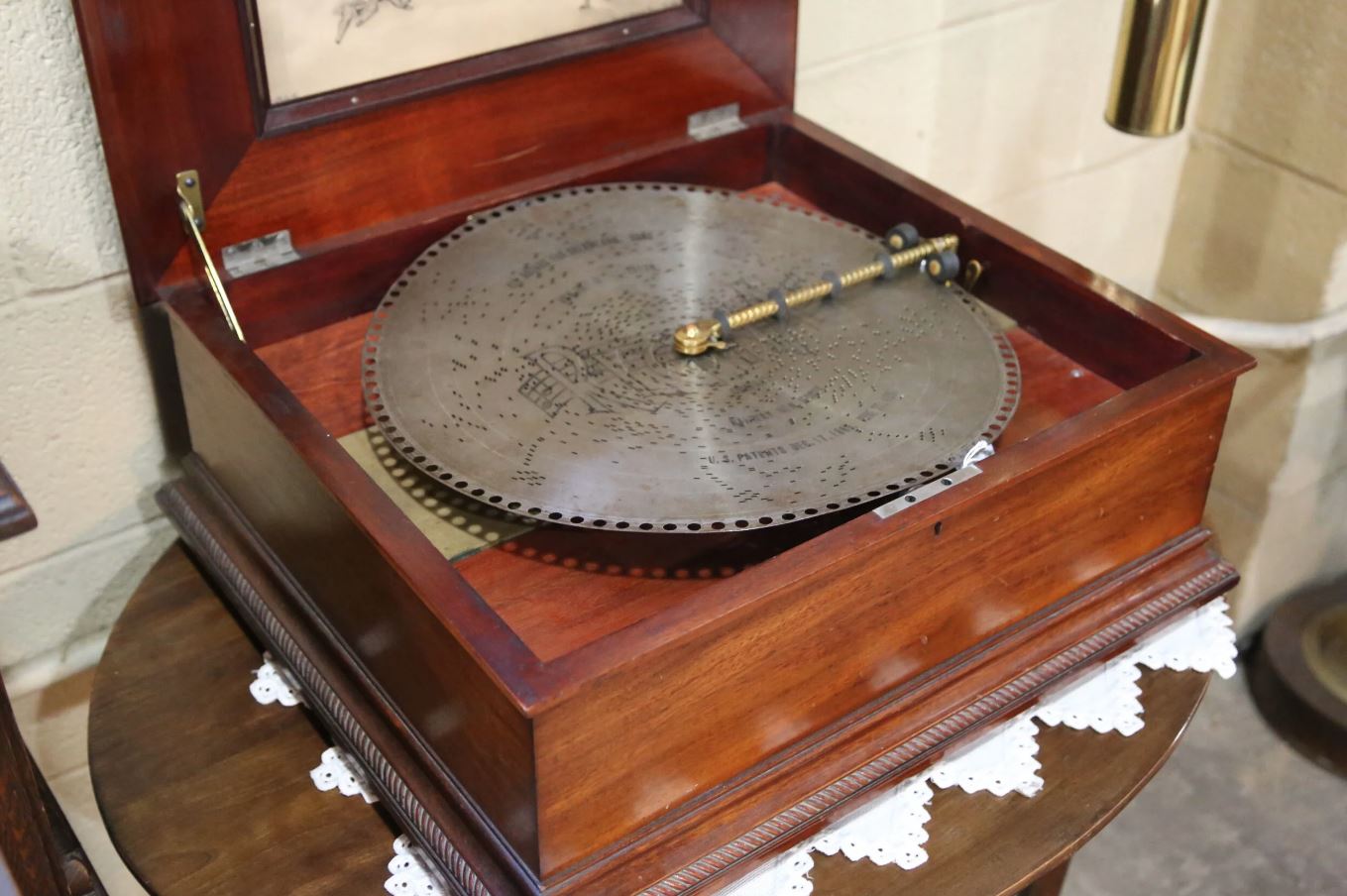
The cylinder music box dominated the nineteenth century, but its limitations soon inspired innovation. Cylinders were difficult to replace, meaning each music box could only play a fixed set of tunes. In the late 1800s, German and American inventors introduced a new format: the disc music box. This design used interchangeable metal discs with perforated patterns that triggered the musical notes. The change revolutionized the industry, allowing owners to expand their musical collections without replacing the entire device. It also democratized music boxes, as discs could be mass-produced more efficiently than hand-pinned cylinders. Brands such as Polyphon and Regina became household names, producing beautifully crafted machines that played everything from folk songs to operatic arias.
The transition to disc technology coincided with broader industrial and cultural shifts. Music boxes became more affordable, finding a place in middle-class parlors and public venues. Some large disc models even served as entertainment machines in cafes and train stations, preceding the era of the phonograph. The crisp metallic tones of the discs carried across rooms, creating an atmosphere of elegance and wonder. For the first time, music could be reproduced mechanically and enjoyed privately, without live musicians. This shift foreshadowed the recording revolution that would follow in the twentieth century, positioning the music box as a bridge between handcrafted artistry and industrial innovation.
The Golden Age of Design and Craftsmanship
The late nineteenth and early twentieth centuries marked the artistic peak of music box creation. Craftsmen treated these instruments as both musical devices and works of art. Their exteriors featured marquetry, enamel inlay, and fine engraving, often inspired by classical motifs. Some were designed as furniture pieces, with secret compartments and intricate veneers. Others took whimsical forms such as birds, flowers, or miniature theaters, blending mechanics with sculpture. Automaton music boxes, in particular, captivated audiences by combining motion and melody. Tiny dancers spun, birds sang, and figures bowed in rhythm to the tune, transforming sound into performance. Each mechanism represented hundreds of hours of meticulous labor, demanding precision on both an engineering and artistic level.
This period also produced some of the most collectible examples known today. Makers like Bontems, Paillard, and Mermod Frères became synonymous with quality and elegance. Their creations exemplified the union of science and sentiment that defined the nineteenth-century imagination. Every detail, from the tooth alignment of the comb to the lacquer finish of the box, was designed for both function and beauty. These music boxes became family heirlooms, passed down through generations as tangible reminders of craftsmanship and emotion. They symbolized an era when technology was personal, tactile, and poetic.
Music Boxes in the Age of Electricity
The arrival of recorded sound at the dawn of the twentieth century transformed how people experienced music. The phonograph and later the radio introduced electric reproduction, shifting public taste toward new technologies. The mechanical music box, once a marvel of innovation, began to feel nostalgic. Production declined, and many manufacturers turned their skills toward watchmaking and jewelry instead. However, music boxes did not disappear. They adapted, finding new life as decorative and sentimental objects. Miniature music boxes were incorporated into jewelry cases, clocks, and toys, preserving their charm for personal enjoyment. While the mechanical principles remained the same, electric winding systems replaced manual cranks in some designs, ensuring their continued relevance in a changing world.
During this period, Japan emerged as a new leader in music box manufacturing. Companies like Sankyo and Reuge revitalized the craft, producing reliable mechanisms that combined traditional sound quality with modern efficiency. Their designs often paired classic melodies with compact formats, allowing music boxes to remain accessible and collectible. These innovations ensured that music boxes survived not only as relics of the past but as evolving symbols of artistry and affection. The sound of a tiny steel comb plucking its tune continued to enchant audiences, even in an era of digital sound.
The Emotional Resonance of Mechanical Sound
What makes music boxes so enduring is their emotional power. The gentle, imperfect tone of their mechanisms creates a uniquely human listening experience. Unlike recorded audio, each music box carries subtle variations in pitch and timing that make its performance intimate and unpredictable. The act of winding the key establishes a ritual, a brief collaboration between human hand and machine. As the spring tightens and the gears begin to turn, the listener anticipates a melody that feels alive. The music box becomes a symbol of memory, often associated with childhood, love, or loss. Its songs are rarely loud or complex, but they resonate deeply because they are fragile, transient, and unrepeatable.
Psychologists and collectors alike note the nostalgic effect of music boxes. Their sound evokes a sense of safety and familiarity, triggering recollections of past moments. This emotional connection explains their presence in literature, cinema, and art, where they often represent innocence or melancholy. In contemporary art installations, the mechanical repetition of a music box tune is used to explore time, memory, and impermanence. The device itself has become a metaphor for human experience, delicate, mechanical, yet profoundly expressive.
Collecting and Restoring Antique Music Boxes
Collectors regard antique music boxes as treasures that blend mechanical complexity with historical artistry. Each piece tells a story of craftsmanship, technological progress, and cultural taste. Collecting requires both passion and knowledge. The most prized examples are those with original mechanisms, pristine combs, and authentic cases. Cylindrical models with multiple tunes or automaton features are especially sought after. Provenance plays a crucial role; a documented history or connection to a renowned maker can greatly increase value. However, beyond monetary worth, collectors often describe the satisfaction of hearing a centuries-old mechanism come back to life as the true reward of ownership.
Restoration is a delicate art in itself. It demands patience, precision, and respect for authenticity. Skilled restorers clean gears, replace broken teeth, and retune combs using methods faithful to the original construction. In some cases, parts must be recreated by hand to match historical standards. Restoration not only preserves functionality but also ensures that the music box remains a living artifact rather than a silent relic. Museums dedicated to mechanical music, such as those in Switzerland and Germany, continue to preserve these devices for future generations, offering insights into the evolution of sound and craftsmanship.
Music Boxes in Modern Design and Popular Culture
Today, the influence of the music box extends far beyond its original form. Designers and artists incorporate its mechanisms into contemporary works that explore the relationship between sound, movement, and nostalgia. Modern engineers create hybrid music boxes that integrate digital programming with traditional mechanics, allowing for custom melodies and interactive features. Some artists produce large-scale installations that reinterpret the principles of the music box using new materials and technologies. The core idea, a device that transforms mechanical motion into emotional resonance, remains as compelling as ever.
In popular culture, music boxes continue to capture the imagination. They appear in films, novels, and video games as symbols of mystery or sentimentality. Their melodies often mark turning points in stories, connecting the physical object to memory and emotion. The haunting sound of a music box theme can evoke longing, romance, or suspense, depending on context. Even in an age of streaming and digital soundscapes, the simplicity of a hand-cranked tune holds aesthetic power. It represents a form of analog intimacy that cannot be replicated by modern devices. As technology becomes increasingly abstract, the tactile and mechanical qualities of the music box gain renewed cultural significance.
The Timeless Appeal of the Music Box
The music box endures because it appeals to both the intellect and the heart. It stands at the intersection of art, engineering, and emotion. Each piece is a miniature orchestra, a mechanical poem that translates craftsmanship into melody. Its survival across centuries reflects the human desire to combine beauty with invention. In an age defined by speed and digitization, the music box reminds us of the value of patience and detail. Its gears and springs are not obsolete; they are symbols of continuity between past and present. Whether displayed in a collection, gifted as a keepsake, or played quietly in a private room, the music box continues to turn motion into music and mechanics into memory.