

Traces of Humanity in a Postmarked World
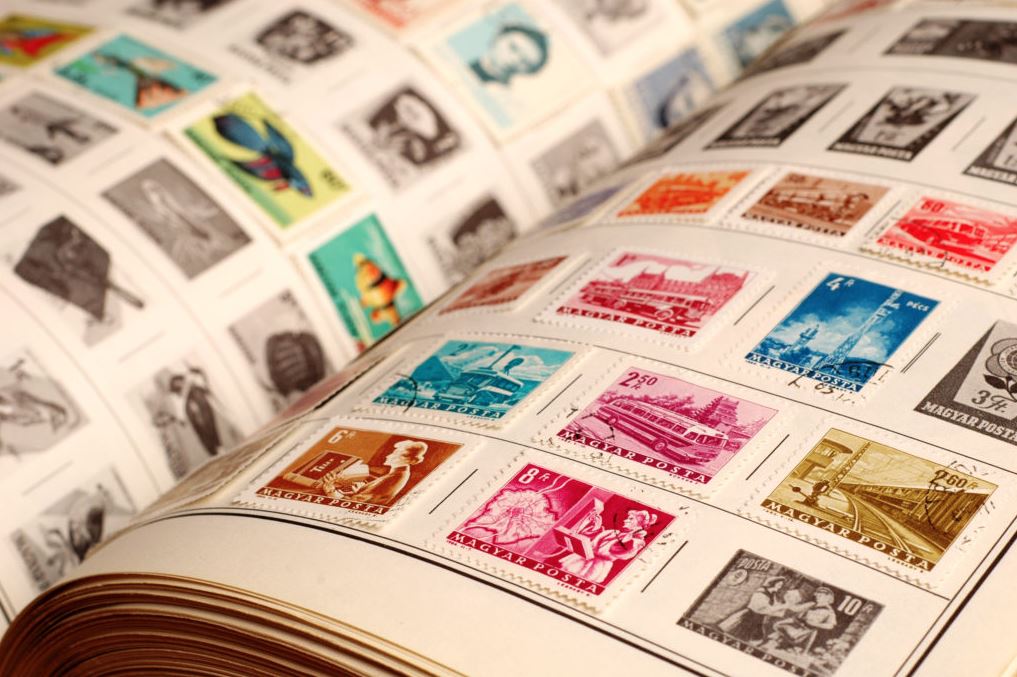
Unfolding the artistry, emotion, and human connection preserved within the small square worlds of postage
The Journey Inside the Envelope
Before the digital age blurred distances, a letter was a bridge between souls, and the stamp was its passport. Every adhesive square carried more than payment for delivery, it carried intent. A stamp represented trust that words could cross oceans and reach another heart. For collectors, these tiny emblems are fragments of the world’s shared conversation. They capture history at its most intimate scale, showing not kings and battles alone but communication itself. To study a stamp is to study the rhythm of exchange, the movement of ideas, and the beauty of purpose embedded in paper and ink. The first postage stamp, the Penny Black of 1840, transformed correspondence into an art of accessibility. From that moment forward, stamps became more than instruments of bureaucracy, they became miniature canvases through which nations expressed identity and pride. Each one is a small declaration that art belongs even in the most ordinary moments of life.
Collectors, often called philatelists, understand this dual nature deeply. They do not merely gather paper, they gather the traces of journeys completed. Behind every cancellation mark and corner tear lies the evidence of motion. A single stamp might have traveled through war, peace, famine, or celebration. To hold it is to touch what once moved between hands and borders, carrying messages of love, commerce, and survival. These fragments, humble in scale yet profound in spirit, continue to speak of humanity’s longing to connect.
The Birth of an Icon
The history of stamps mirrors the history of modern civilization. When Great Britain introduced the first adhesive postage stamp, it democratized communication. People who once depended on messengers or expensive courier services could now write freely. Other nations soon followed, adapting the idea to their own cultures and politics. Each new issue became a reflection of its era’s values. Monarchs, explorers, poets, and landscapes appeared on tiny squares that traveled farther than any monument could. The stamp became both document and diplomat, quietly representing its country in the hands of strangers abroad. Its imagery shaped perceptions and carried symbols of national pride to every corner of the world.
Through the decades, technological progress altered both the process and purpose of design. Early engraving gave way to lithography and photogravure, allowing richer color and detail. Artists began treating stamp design as serious creative work rather than decoration. This collaboration between art and utility produced some of the most striking examples of miniature design in human history. Today, collectors trace stylistic evolution through these changes, finding within each stamp the mark of its maker’s imagination. The birth of the postage stamp was not merely administrative reform. It was the invention of a global art form disguised as everyday necessity.
The Collector’s Eye
For the true collector, the stamp is both object and mystery. Its value lies not only in rarity but in the narrative it conceals. The collector learns to see what others overlook: the paper texture, perforation depth, color variation, and faint watermark hidden beneath light. Each mark or flaw tells a story of production and survival. A misplaced perforation or inverted design might transform a common issue into a treasure. But beyond financial worth, there is emotional significance. Collectors speak of the quiet satisfaction of organizing, the thrill of discovery, and the meditative patience the hobby requires. Their albums become personal museums, where history is not locked behind glass but alive in fingertip contact.
To collect stamps is to learn to slow down. Every addition to the album demands observation and understanding. The collector becomes a student of geography, politics, and art simultaneously. In tracing postal routes, they uncover forgotten colonies and vanished borders. They see the rise and fall of regimes through imagery and inscription. The act of collecting thus becomes a means of mapping time itself. The collector’s eye is not driven by accumulation but by curiosity, an unending search for the stories that live in the margins of communication.
The Art of Printing Memory
Stamp design stands at the intersection of technology and imagination. Each issue requires collaboration among artists, engravers, typographers, and printers. The constraints of size challenge creativity. Within an inch of space, entire histories must be condensed into legible beauty. A successful stamp design communicates instantly yet invites deeper study. The finest stamps achieve balance between precision and emotion, between national symbolism and universal resonance. They are miniature posters for the soul of a country, expressing ideals through composition and color.
Printing techniques vary widely, each leaving its own texture and tone. Intaglio engraving creates depth that can be felt beneath the fingertip. Lithography offers vibrant hues and painterly transitions. Offset printing allows photographic realism. Collectors often trace the evolution of these techniques as evidence of human ingenuity. A stamp’s production reflects the craftsmanship of its era as much as its subject matter. It is a small miracle that something so utilitarian could embody such aesthetic refinement. Every detail, from border ornament to typography, becomes part of a visual language that bridges cultures without translation.
The World in Miniature
Stamp collections can resemble atlases of wonder. Within their pages lie entire continents reduced to scale. Mountains, oceans, wildlife, and monuments coexist in orderly rows, forming a visual encyclopedia of existence. Stamps record exploration and innovation. They commemorate discoveries, inventions, and anniversaries of human triumph. They celebrate peace treaties, space missions, and revolutions. A collection spanning multiple nations offers not just variety but perspective. It reveals how each culture chooses to represent itself, what it values, and what it remembers. The collector becomes both traveler and historian, guided not by compass but by curiosity.
The diversity of themes extends to art, literature, and science. Stamps have honored composers, architects, and activists. They have captured endangered species, celestial phenomena, and cultural rituals. Each issue reflects its society’s relationship with knowledge and imagination. Through stamps, a person can experience the world without leaving home. They hold in their albums the geography of dreams, proof that art can travel farther than any explorer. In this way, philately becomes a universal language, spoken silently through images and numbers yet understood everywhere by those who listen with their eyes.
The Patience of Preservation
Preserving stamps requires devotion to detail. Though small, they are delicate witnesses to time. Paper reacts to light, humidity, and touch, which means that carelessness can erase centuries in minutes. Collectors use acid-free mounts, glassine envelopes, and humidity-controlled environments to protect their treasures. Tweezers replace fingers, and magnifying glasses replace haste. This ritual of preservation mirrors the discipline found in other arts. It is a practice of respect. Each preserved stamp represents an act of resistance against forgetfulness. To maintain them is to sustain the memory of communication itself.
Restoration, when necessary, is performed with surgical precision. Specialists study pigments, adhesives, and fibers to ensure authenticity. Modern technology now allows microscopic analysis and digital imaging for documentation, yet the essence of preservation remains tactile. The collector’s care is as much emotional as technical. They protect not just paper, but presence. The album becomes a sanctuary where fragility finds refuge. In this patience lies the deeper reward of the hobby, the feeling that one’s attention contributes to the survival of beauty.
The Hidden Histories Behind Postmarks
Postmarks, often overlooked by casual observers, are essential to the poetry of stamps. They record time, location, and circumstance. A circular cancellation from a city no longer existing, a military field post during war, or a commemorative marking from a world exposition transforms an ordinary stamp into historical testimony. These traces provide context, bridging the gap between sender and receiver. For historians, postmarks offer evidence of movement and communication patterns, mapping how ideas and emotions traveled across boundaries. They capture not only where a letter began but where it lived along the way.
Some collectors specialize in covers, envelopes still bearing their original postmarks and correspondence. Known as postal history collectors, they focus on narrative rather than design. Each envelope becomes a story complete with characters, dates, and geography. Together, they reconstruct the invisible network of connection that defined earlier centuries. The charm of postmarks lies in their spontaneity. Unlike the deliberate artistry of stamp design, they are marks of chance, the intersection between precision and accident. They remind collectors that beauty often arises unexpectedly, in the simple act of movement and touch.
The Marketplace of Memory
The global community of stamp collecting thrives on exchange. Auctions, exhibitions, and clubs create spaces where knowledge circulates alongside stamps. Collectors trade not merely for value but for completeness, chasing elusive issues or rare misprints. Yet even as prices rise for rare finds, philately remains one of the most democratic of hobbies. A child can begin with pocket change and curiosity, while seasoned experts handle artifacts worth fortunes. The shared language of appreciation bridges these differences. Whether one owns thousands of stamps or a handful, the motivation remains the same: fascination with stories told in ink and gum.
The market also reflects ethics and stewardship. Authenticity is protected by certification, and provenance adds weight to value. Auctions often resemble theatrical performances, filled with suspense and discovery. However, beyond commerce, the culture of collecting fosters preservation and education. Museums and national postal services curate exhibits that celebrate stamps as cultural artifacts. They remind audiences that these tiny objects once connected millions of people, carrying news, emotion, and art across continents. The marketplace of memory ensures that stamps continue to circulate, not as currency, but as symbols of endurance and beauty.
The Whisper of Paper Across Time
When a collector opens an album and gazes upon rows of stamps, silence becomes eloquent. Each piece rests as proof that communication, at its heart, is an act of hope. Though technology has transformed how we connect, the stamp remains a relic of tangible emotion. It represents faith in distance, patience, and human touch. The whisper of paper across time speaks softly but persistently, reminding us that art and intention can survive even the swiftest eras of change. To collect stamps is to listen to that whisper and to join the centuries-long conversation carried on the backs of envelopes. Within these fragile squares endures the story of a world determined to keep in touch, one imprint at a time.